Bre-B para negocios: cómo recibir pagos inmediatos con llave y QR, y cuánto cuesta
Cómo cobrar con Bre-B en tu negocio: los cinco tipos de llave y cuál conviene, el QR del…
Leer artículo →14 de October de 2026

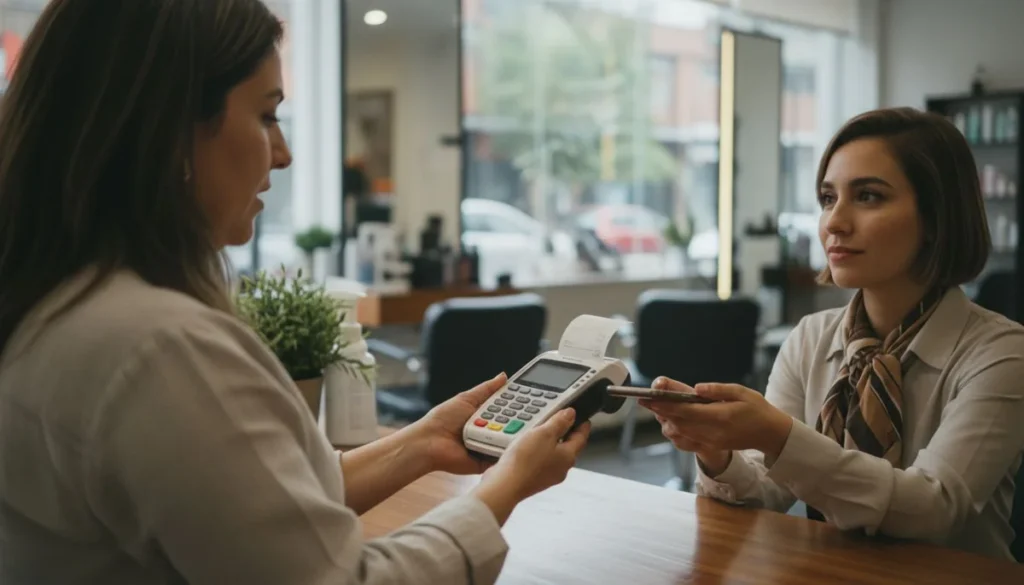
Saber cuánto cobra un datáfono por transacción en Colombia se resume en un número: entre 2,5% y 3,5% del valor de cada venta, más un fijo de unos $300 por operación y el IVA sobre esa comisión. Sobre una venta de $100.000, el negocio recibe cerca de $96.500 netos. La marca, el tipo de tarjeta y tu volumen mensual mueven ese porcentaje.
A todo dueño de negocio le pasa lo mismo la primera vez que cruza el extracto con las ventas del día: cobró $500.000 en tarjeta pero al banco entró menos. Ese faltante no es un error, es la comisión del datáfono trabajando en silencio. Entenderla es la diferencia entre regalar plata cada mes y quedarte con lo que te corresponde.
No hay una tarifa única. Cada proveedor arma su tabla y casi todos la ajustan por volumen: mientras más vendes, más margen tienes para negociar el porcentaje hacia abajo. Y no todas las marcas publican su número. Las fintech lo ponen en su web; los bancos lo fijan según la actividad de tu negocio y te lo dicen en la afiliación.
| Proveedor | Comisión débito | Comisión crédito | Fijo por transacción | Mensualidad / alquiler |
|---|---|---|---|---|
| Bold | 2,89% | 2,89% | $300 | Sin costo |
| Redeban | No publicada (según tu código CIIU) | No publicada (según tu código CIIU) | No publicado | $10.510 a $99.845 sin IVA según el modelo; gratis si pasas el mínimo de transacciones |
| Credibanco (vía tu banco) | 1,31% a 2,16% (promedio por banco) | 1,52% a 2,12% (promedio por banco) | Lo fija el banco | Lo da el banco, caso por caso |
| Bancolombia | 1,85% (promedio) | 1,79% (promedio) | No publicado | El equipo lo cobra un tercero, no el banco |
| Davivienda | 1,80% (promedio) | 1,52% (promedio) | No publicado | Equipo opcional, lo entrega Redeban o Credibanco |
| Wompi (Bancolombia) | 2,65% | 2,65% | $700 | Sin costo y sin terminal (cobras con QR o link) |
| Mercado Pago Point | ~2,9% a 3,5% | ~2,9% a 3,5% | Según plan | Sin costo |
Bold, Wompi y Mercado Pago: tarifas de referencia 2026, antes de IVA. Credibanco, Bancolombia y Davivienda: comisión promedio ponderada del segmento general en tarjetas Visa entre el 1 de abril y el 30 de junio de 2026, tomada del consolidado trimestral que Credibanco publica sobre las comisiones de adquirencia. El rango de Credibanco cubre Davivienda, Banco de Bogotá, Bancolombia, Occidente y BBVA. Tu tarifa real la fija el banco y puede quedar arriba o abajo del promedio.
Ojo con el choque de rangos. Por la ruta bancaria los promedios de la tabla van de 1,31% a 2,16%, por debajo del 2,5% a 3,5% que cobran las fintech sin mensualidad. A cambio, el banco te pide una cuenta con él y el RUT al día, y en Redeban pagas el equipo cada mes que no llegues al mínimo de transacciones.
Si todavía no decides entre marcas, te sirve nuestra comparativa de los mejores datáfonos para negocios y el cara a cara entre Bold y Redeban.
El porcentaje que ves anunciado casi siempre corresponde al débito nacional, que es el más barato porque la red de pagos asume menos riesgo. El crédito sube porque el emisor adelanta la plata a tu cliente. Y cuando entra una tarjeta internacional (un turista, una compra de afuera), se suma cerca de un punto adicional por el intercambio entre bancos.
Por eso dos negocios con el mismo datáfono pueden pagar comisiones distintas: depende de con qué le pagan tus clientes. Un restaurante turístico verá más internacionales; una tienda de barrio, casi todo débito.
La comisión no viaja sola. Encima va el IVA del 19% sobre ese cobro, y cuando pasás la plata del datáfono a tu cuenta corriente aparece el 4×1000. Ese impuesto vale 0,4% de cada retiro y lo administra la DIAN, que permite marcar una sola cuenta como exenta hasta 350 UVT al mes (cerca de $18,3 millones en 2026). Muchos negocios pagan ese gravamen por no activar el beneficio.
Así se ve el desglose de una venta de $100.000 pagada con débito a una comisión del 2,89% más $300 fijos.
| Concepto | Valor |
|---|---|
| Venta bruta | $100.000 |
| Comisión (2,89% + $300) | – $3.190 |
| IVA sobre la comisión (19%) | – $606 |
| 4×1000 al retirar (0,4%) | – $400 |
| Neto que te queda | $95.804 |
Regla práctica: por cada millón de pesos que cobrás en tarjeta, presupuestá entre $35.000 y $45.000 de costo total. Si tu margen es del 20%, esa comisión se come una quinta parte de tu ganancia en esa venta.
Bajar lo que cobra un datáfono por transacción es cuestión de método, no de suerte. Estos pasos sirven para cualquier negocio, sin importar la marca que tengas hoy.
En Digital Trendy 360 te ayudamos a montar los medios de pago y la tienda que menos comisión te cobran por cada venta, con las cuentas claras desde el día uno.
Entre 2,5% y 3,5% del valor de la venta, más un fijo cercano a $300 y el IVA del 19% sobre esa comisión. En débito suele quedar en el piso del rango y en crédito en el techo. Sobre $100.000 pagás alrededor de $3.800 en total.
Con débito. La comisión de débito nacional es la más baja porque la red asume menos riesgo. El crédito y sobre todo las tarjetas internacionales suman puntos adicionales que salen de tu margen.
Las fintech como Bold y Mercado Pago Point no cobran cuota fija ni alquiler: solo pagás la comisión cuando vendés. Los adquirentes tradicionales como Redeban pueden sumar un alquiler mensual que se exonera si superás cierto volumen.
No, lo cobra el Estado cuando movés la plata a tu cuenta, y equivale al 0,4% del retiro. Podés dejar una cuenta marcada como exenta hasta 350 UVT al mes para no pagarlo en tus operaciones del negocio.
Sí, sobre todo con los adquirentes tradicionales. Si tu facturación mensual en tarjeta es alta, tenés poder de negociación para bajar el porcentaje. La Superintendencia Financiera de Colombia supervisa a estos proveedores, así que exigí siempre el tarifario por escrito.
Un datáfono en Colombia te cobra entre 2,5% y 3,5% por transacción, más un fijo y el IVA, y esa cuenta se agranda con el 4×1000 si no marcás una cuenta como exenta. La marca que elijas y el tipo de tarjeta con que te pagan mueven el número, pero el control está de tu lado: negociá por volumen, activá la exención y empujá los medios más baratos cuando el ticket lo permite. Cada punto que bajás es margen que se queda en tu negocio. Si querés ordenar todos tus medios de pago para vender más y perder menos en comisiones, mirá nuestra guía de medios de pago para tu negocio en Colombia o las pasarelas de pago para tu tienda online, y contrastalo con los datos de comercio electrónico de las pymes colombianas.
Cuéntanos tu proyecto y recibe una asesoría sin costo.
Usamos cookies propias y de terceros para mejorar tu experiencia y analizar el tráfico del sitio. Podés aceptarlas o rechazarlas. Más info en nuestra política de cookies.